

What is an Inverter Air Conditioner
I lived and worked in the heat of Perth, and I have witnessed how cooling technology has changed rapidly. No longer are homeowners content with ordering any air conditioner, but they want an efficient, quiet, and affordable one. That is why I often hear the same question: “What is an inverter air conditioner, and is it worth it?”
Why More Perth Homeowners Choose Inverter Air Conditioners
Modern inverter air conditioners are designed to maintain a more consistent temperature while using less energy than older fixed-speed systems. Instead of constantly turning on and off, inverter technology adjusts compressor speed automatically to improve comfort, reduce noise and lower running costs. This is why inverter split systems and ducted air conditioning systems have become the preferred choice for many Perth homes.
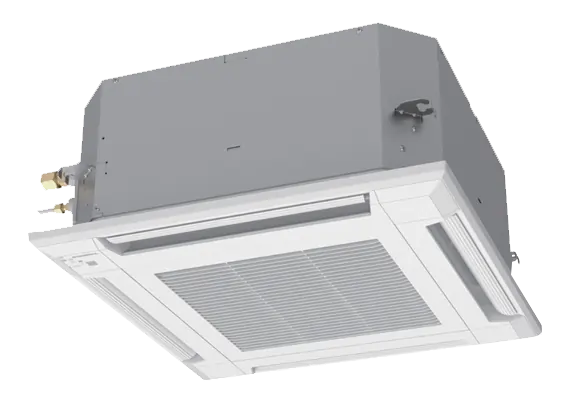
 2.5–7.1kW
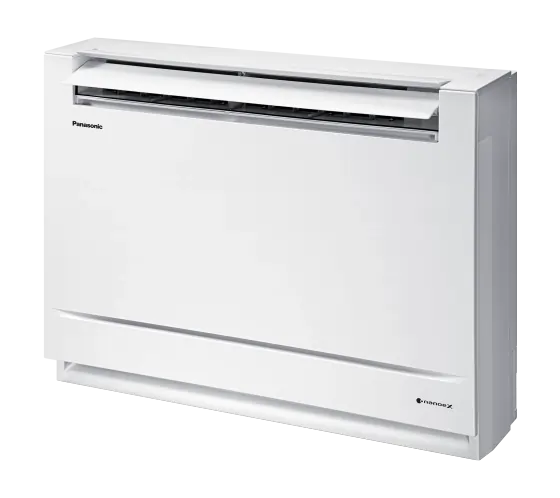
 3.2–8.0kW


As someone who works with inverter air conditioners, split systems, ducted systems, and any type of modern AC systems, I can tell you that the shift towards inverter technology is not a surprise.
People desire smarter cooling, enhanced energy efficiency, and a system that maintains a constant temperature without consuming excessive electrical energy.
Choosing the most suitable air con for your home is the greatest decision you can make for comfort and energy efficiency. And it is best to start with what an inverter aircon is, how it operates, and why so many Perth homeowners are choosing it.
What is an Inverter Air Conditioner?
The key distinction between an inverter air conditioner and a non-inverter one lies in how the compressor operates. It is a large outdoor box with a big fan, for your house or flat.
An air conditioner inverter uses inverter technology and microprocessors to adjust the compressor speed to meet cooling or heating requirements. When the room reaches the desired temperature, the inverter AC will reduce the motor speed, conserving energy and keeping the space comfortable.
Why Choose An Inverter Air Conditioner?
Selecting the appropriate inverter air conditioner means finding the middle ground between energy consumption, cost savings, and high-quality air. Homeowners who seek credible, trusted inverter air conditioning systems want a system that delivers stable cooling and heating with minimal noise.
The reason inverter technology has been preferred is that it helps save energy, ensures uniform temperatures, and runs quietly. But what is an air conditioning inverter, and why is it better than the conventional non-inverters?
How Does an Inverter Air Conditioner Work?
The main difference between a non-inverter air conditioner and an inverter air conditioner is the way the compressors operate. An inverter AC uses a variable-speed compressor, whereas a non-inverter AC operates at a constant speed. Variable-speed compressors are more energy efficient and produce less noise.
Another critical difference is the kind of AC refrigerant employed. Many non-inverter ACs use refrigerants that emit more greenhouse gases, which are harmful to the environment.
Contemporary inverter aircon models can utilise effective refrigerants such as R32, which offer better cooling capacity and lower emissions.
Inverter Air Conditioner vs Non-Inverter: What’s the Difference?
- Inverter Air Conditioner: Consider the inverter technology as cruise control in a vehicle. Cruise control, when travelling on the highway, ensures that the throttle is held at a constant speed and speeds up or slows down accordingly to keep the vehicle on target. This conserves fuel and makes driving easier. In the same way, an inverter air conditioner continuously adjusts the compressor speed to maintain a constant room temperature, thereby enhancing energy savings and comfort.
- Non-Inverter Air Conditioner: Conversely, the older-style compressors in traditional non-inverter ACs can run at full power only or be shut off completely. To cool the room, a non-inverter air conditioner would operate the compressor at full capacity until the required temperature is achieved, then turn off. Once the room warms up again, the compressor is started at full blast and cycles on and off until the temperature is maintained, which is less efficient than an aircon inverter system.
Types of Inverter Air Conditioning Systems
Choosing an appropriate inverter air conditioner type depends on your home’s structure, temperature requirements, and installation preferences. Below are the most common inverter-based options, all featuring inverter technology that regulates compressor speed to achieve more efficient cooling.
Inverter Split Air Conditioner / Inverter Split System
An inverter split air conditioner, or inverter split system, is one of the most recommended for homes. These systems have both an indoor unit and an outdoor compressor, connected by an AC inverter that maintains a constant temperature.
Related: Split System Air Conditioning Cost Guide
Inverter Window Air Conditioner
A window-inverter air conditioner is suitable for small areas. If you live in an apartment or a rental house with limited wall space for installing an air conditioner, a window inverter air conditioner is a simple solution to enjoy inverter air conditioning without making structural adjustments.
Although small in size, these systems still feature an air conditioning inverter, which contributes to lower noise levels and enhanced energy control.
Inverter Portable Air Conditioner / Portable Inverter Air Conditioner
A portable inverter air conditioner, or an inverter portable air conditioner, is a versatile option when you need mobility or simply cannot commit to a permanent installation. It offers numerous advantages of inverter technology in a portable unit.
- Can be moved from room to room
- Plug-and-play operation
- Slightly less efficient than fixed inverter air con systems
- Limited cooling capacity compared to split or window units
Portable units are convenient for renters and temporary residents, but they might not be as effective as a dedicated inverter aircon unit.
Inverter Ducted System AC
For whole-home cooling, it is hard to beat a ducted system AC powered by inverter technology. These systems will incorporate a central indoor unit connected to ducts throughout your home.
- Even temperature control throughout the house
- Reduced energy bills thanks to efficient load management
- Ideal for new builds and large homes
Related: Ducted Air Conditioning Cost Guide
Inverter Evaporative AC (If Applicable in Your Region)
In places where evaporative cooling is used, an aircon inverter can also be added to modern systems to control fan speed and optimise overall energy consumption.
Although evaporative units do not use a standard cooling method like a traditional inverter air conditioner, when used with an inverter controller, they are more efficient and comfortable.
How Inverters Integrate with Evaporative Cooling
- Smooth fan speed transitions
- Lower power consumption
- Better airflow control in dry climates
Related: Evaporative Cooling Cost Guide
Advantages of Inverter Air Conditioners
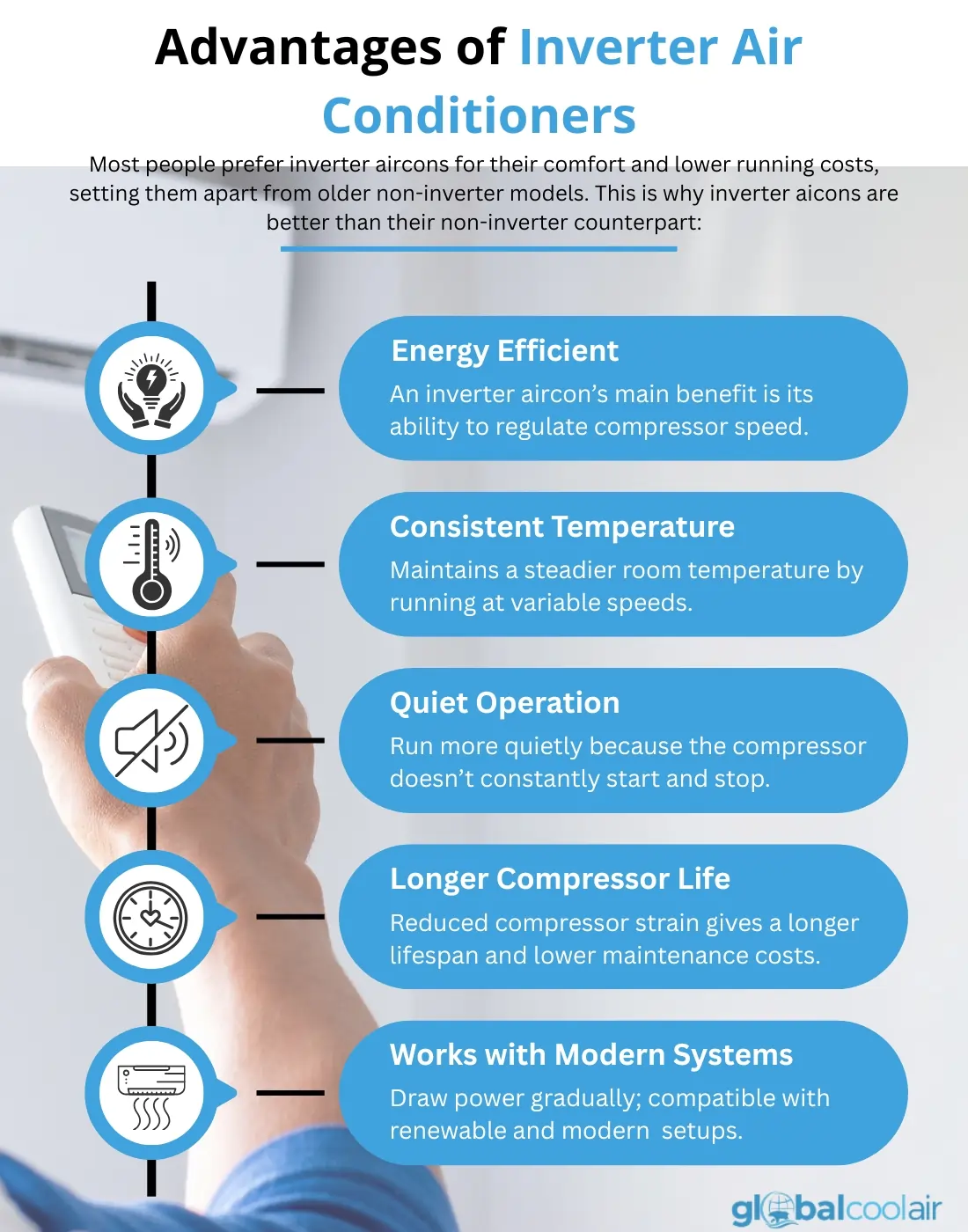
The majority of inverter air conditioners available today are preferred by people who want to enjoy comfort and lower running costs.
This is what makes an inverter AC different from the old non-inverter models.
Energy Efficiency and Lower Power Bills
The fact that an inverter aircon can regulate the compressor speed rather than switching it on and off repeatedly is one of the greatest benefits of this type of air conditioning. This capability is the essence of an inverter air conditioner.
Why it matters:
- Uses only the energy needed to maintain your desired temperature
- Avoids the high power spikes common in non-inverter units
- Helps lower long-term electricity costs
Consistent, Stable Temperature
Since an air conditioning inverter can operate at variable speed, it can maintain a more consistent temperature in your room. An inverter air con provides a cooling experience that’s as smooth and consistent as possible, unlike the visible variations you get with stop-start systems.
Benefits include:
- No sudden blasts of cold air
- Better humidity control
- Improved comfort, especially in bedrooms and living rooms
Quieter Operation
Reduction of noise is another major benefit of inverter split systems and inverter window air conditioners. The compressor does not have to start and stop frequently; therefore, the system operates with less noise (particularly at lower speeds).
This is also applicable to portable inverter air conditioners, which are usually quieter than their non-inverter counterparts.
Longer Compressor Life
Since an aircon inverter reduces compressor load by avoiding frequent restarts, the system will have a longer lifespan. This longevity is often overlooked but is crucial when comparing inverter air conditioners vs non-inverter models.
This advantage also saves on maintenance costs in the long run, even with the possible drawbacks of inverter air conditioners, such as higher initial costs.
Works Well With Renewable Energy & Modern AC Systems
Many modern households are currently matching their inverter ACs with solar power and other renewable energy technologies. Inverter technology enables the unit to draw power slowly rather than in large bursts, making it much more compatible with sustainable setups.
Ideal for:
- Homes using solar panels
- Energy-efficient air conditioner builds
- Smart homes with modern AC systems supply installations
This makes inverter air conditioners a smart, long-term investment, particularly when planning to build a home with a lower environmental impact.
Disadvantages of Inverter Air Conditioners
Inverter air conditioners are very efficient and comfortable, but they are not without weaknesses. The following are the main drawbacks to consider before selecting an inverter AC for home installation.
Higher Upfront Cost
One of the most visible disadvantages is the price. All inverter models are generally pricier than the standard ones.
Why is the cost higher?
- More advanced inverter technology
- Variable-speed compressors
- Additional electronic components
More Complex Repairs
Owing to the sophisticated AC inverter and more advanced electronics, the system might not be repaired as easily as the non-inverter models. Even the technology that makes the operation smoother and more energy-efficient requires additional expertise in case of problems.
This applies to all types of AC, from inverter air con systems to inverter window air conditioners and inverter portable air conditioner units.
Sensitive to Improper AC Installation
An air conditioner inverter depends on accurate installation to deliver optimum performance. Improper refrigerant levels, wiring errors, or improperly located indoor or outdoor units may cause poor performance, noise, or even system failure.
This is why it is necessary to hire trained professionals for AC installation.
Requires Skilled AC Repair Technicians
Due to the more advanced components of an inverter aircon, it is not recommended that unqualified people perform troubleshooting or repairs. Unlike the non-inverter units of the past, these systems use digital controls that require specialised diagnostic equipment.
This need for expertise is a practical downside, especially in areas where inverter-trained technicians are limited.
Compatibility Issues With Very Old Electrical Systems
Aging houses may have power supplies or electrical wiring systems that cannot adequately support an inverter air conditioner. Inverter units are typically more efficient; however, the delicate electronics require that the voltage remain stable and that grounding is properly implemented.

Choosing the Best Inverter Air Conditioner
Various models of air conditioner inverters differ in efficiency, construction quality, and noise levels.
Consider:
- Energy ratings
- Compressor reliability
- Warranty coverage
- Noise output
- Availability of service and parts
These help narrow down which inverter AC offers the best long-term value.
Sizing Considerations
Proper sizing of your inverter air con makes it more effective.
Take into account:
- Room size
- Ceiling height
- Insulation
- Sun exposure
Proper sizing will ensure the AC inverter maintains a comfortable temperature without any overworking.
Budget Considerations
While inverter air conditioners cost more upfront, they reduce power bills thanks to inverter technology.
Although inverter air conditioners are more expensive to purchase initially, the inverter technology helps them save on power bills.
Consider:
- Installation costs
- Expected energy savings
- Maintenance needs
The long-term efficiency of an inverter AC pays off much better than the initial investment for many households.
Professional Help: Installation, Maintenance & Services
There’s always a need to work with trained professionals like Global Cool Air when using inverter air conditioners. Because these systems rely on precise inverter technology, proper handling—from installation to maintenance—directly affects performance and lifespan.
Why Proper AC Installation Is Crucial
Any air conditioner inverter system requires accurate refrigerant levels, proper wiring, and the correct placement of airflow. Ineffective AC installation may lower efficiency or overload the compressor. This is why people at home tend to use professional air conditioning services to ensure their inverter air con is installed the first time round.
Importance of Scheduled Maintenance and AC Repair
Regular servicing will keep your inverter AC running smoothly and help prevent breakdowns. Since inverter systems use advanced electronics, expert AC repair is necessary to preserve critical components.
A qualified technician will regularly maintain the inverter air conditioner to extend its lifespan so that you can experience its full benefits.
How Experts Assess Home Needs for AC Systems
Professionals evaluate room size, insulation, airflow, and layout to recommend the best AC systems for your home. Whether you need a single inverter split system or a more complex setup, specialists can guide you on equipment choices, energy requirements, and even help with AC systems supply to ensure you get the most suitable model.
Experts in air conditioning in Perth can assist with equipment selection, energy needs, and even AC system supply to ensure the most appropriate model.
Let our Team Handle Your Air Conditioning Needs with Confidence!
It is easy now that you know what an inverter air conditioner is and why so many Perth homeowners are increasingly adopting inverter technology rather than older non-inverter systems.
As AC systems continue to evolve, inverter air conditioners are leading in efficiency and long-term reliability.
As a local expert, I would always suggest that you get a proper assessment in place so you have the correct solution from the outset.
We at Global Cool Air provide complete aircon support, including inverter air conditioner installation, maintenance, repair, diagnostics, and even aircon supplies from major AC brands.
Whether you have a question about which AC system is most suitable, or you need a new split system or a repair to an existing one, you need our help.
Ready for a more efficient, reliable way to cool and heat your home?
Contact Global Cool Air today and let our Perth team handle your air conditioning needs with confidence.


Get Your Aircon Quote Today
Request a free air conditioning quote and let our Perth team guide you.