

The Complete Guide to Aircon Insulation for Better Cooling Efficiency
Air conditioners operate by extracting heat from inside a room and moving it to the outside through a cycle of refrigerant, coils, and air.
When everything functions properly, modern air conditioning systems can make indoor areas comfortable even on the hottest of days.
One factor that many people overlook is aircon insulation. Proper air conditioning insulation helps keep the temperature of refrigerant lines (pipes carrying cooling fluid) and ducts (channels for air) steady by reducing heat transfer from the surrounding environment.
This will mean the system will fail to deliver cooling power to the rooms before it even reaches them, without proper air conditioner insulation.
That is why I always urge you to hire professionals, such as Global Cool Air, to properly install and maintain your insulation—don’t wait to secure lasting comfort and efficiency.
Learn how aircon insulation can boost your cooling efficiency—start optimising today!
What is Aircon Insulation?
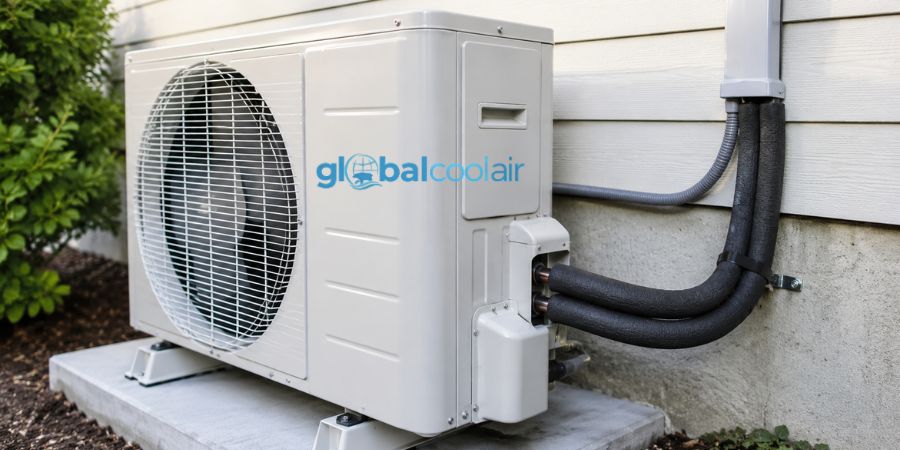
Aircon insulation refers to the protective coverings applied to the main parts of an air conditioning system to manage heat transfer and maintain system efficiency.
This kind of thermal insulation is imperative, since air conditioners depend on refrigerant circulating through pipes to absorb heat indoors and discharge it outdoors.
When these pipes are in warm open air, they can absorb unwanted heat, which makes the system work harder and consume more energy.
Uninsulated refrigerant lines can potentially consume 20% of a system’s energy through thermal transfer, and insulated systems could save energy used in cooling.
Where Aircon Insulation is Used
Air conditioning insulation is applied to several important components of a cooling system to maintain efficiency and protect equipment.
Refrigerant Lines
These copper pipes circulate refrigerant between the outdoor and the indoor units. Since the suction line carries cold refrigerant vapour, it must be insulated to keep it cold and conserve energy.
Air Ducts
In ducted cooling systems, ducts are insulated to prevent the cool air from warming as it moves through ceilings or walls. Without insulation, significant energy is lost through heat transfer.
Indoor and Outdoor Units
Insulation for some elements, such as compressors, condensers, or air handlers, can also be used to stabilise temperatures and protect internal components from environmental conditions.
Drain Pipes
Drain lines that carry condensation off the system can also be insulated in damp climates to avoid external condensation and moisture damage.
Why Aircon Insulation is Important
Proper aircon insulation is an important factor in ensuring the efficiency, durability and performance of your air conditioning system.
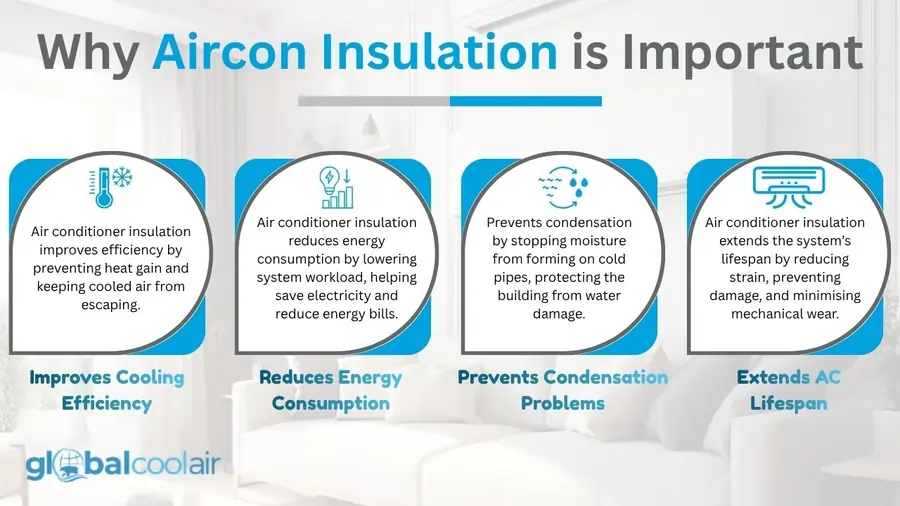
Air conditioning insulation helps a cooling system perform more efficiently and prevents damage to major parts by reducing heat transfer and controlling moisture buildup.
Improves Cooling Efficiency
Increased cooling efficiency is one of the primary benefits of air conditioner insulation.
Refrigerant line insulation enhances system performance by reducing unwanted heat gain along the piping network.
Without insulation, ambient heat will warm the AC refrigerant before it is pumped to the evaporator, lowering the system’s cooling capacity and causing it to strain.
Thermal insulation of air ducts in the ducted system also prevents cooled air from escaping before reaching other rooms.
Reduces Energy Consumption
A key benefit of air con insulation is reduced energy use. Insulated refrigerant lines and air ducts mean the air conditioner runs less often to keep temperatures steady.
Lower system workload means the compressor will cycle less frequently, resulting not only in lower electricity use but also in lower monthly energy bills.
In warm, humid climates where air conditioners run for extended periods, properly installed air conditioning insulation can significantly improve energy efficiency.
Prevents Condensation Problems
Another benefit of insulation is its ability to prevent condensation.
When cold refrigerant pipes are exposed to warm, humid air, moisture in the air can condense on their surfaces. In the long run, this accumulation of water may drip onto ceilings, walls, or floors, causing structural damage.
Installing air conditioning insulation material can help property owners prevent moisture-related problems in the HVAC system and building structures.
Extends Equipment Lifespan
Good aircon insulation can increase the life span of your air conditioning.
Reducing the workload on the compressor (the device that increases refrigerant pressure in the HVAC system) and other mechanical components helps minimise wear and tear over time.
Air conditioner insulation prevents premature damage by preventing heat gain, condensation, and excessive cycling.
This will eventually reduce the risk of system failures or costly breakdowns that may require air conditioner repair.
Types of AC Systems That Require Proper Aircon Insulation
Different types of air conditioning systems depend on aircon insulation to ensure efficiency and prevent energy loss.
Specific insulation requirements depend on the system’s design and layout. This is true for both homes and commercial buildings.
Split System Air Conditioners
A split system air conditioner consists of two major components: an indoor unit that cools air and an outdoor condenser unit that releases heat. Refrigerant lines connect these components, moving the refrigerant between the two units.
The insulation of these refrigerant pipes is important since the suction line carries cold refrigerant vapour.
Without proper air conditioner insulation, ambient heat can warm the refrigerant before it reaches the indoor evaporator coil.
This thermal gain reduces the system’s ability to cool and forces it to work harder to reach the required indoor temperature.
Ducted Air Conditioning
A ducted AC system is one that circulates a supply of cooled air to a building in a series of ducts in the ceiling, walls or floor.
This air moves through long ducts before reaching various rooms; hence, insulation is necessary to maintain the air’s temperature during distribution.
The ducts may lose their temperature when cooled air flows through unconditioned spaces (attics or roof cavities) without adequate air conditioning insulation.
Evaporative Cooling Systems
An evaporative AC system involves evaporating water to cool the air entering the building, which is then dispersed throughout the building.
Although the mechanisms of evaporative cooling systems differ from those of traditional units that use refrigerant, insulation remains a significant factor.
Without proper insulation, hot external air can warm the air before it reaches the rooms, rendering the system ineffective.
Common Aircon Insulation Materials
The use of appropriate aircon insulation is vital for ensuring effective cooling of the HVAC system and preventing heat conduction.
Each type of air conditioning insulation material has its own advantages in terms of thermal resistance, flexibility, and moisture protection.
Foam Insulation
Foam insulation is among the most commonly used refrigerant piping materials in domestic and commercial HVAC systems.
Aircon insulation foam is typically made from closed-cell elastomeric foam, a material whose cells are fully enclosed and not interconnected. This structure provides high thermal insulation and also serves as a vapour barrier, preventing moisture from passing through.
Rubber Insulation
Another common material for air conditioning insulation is rubber.
Elastomeric rubber insulation is also flexible, durable, and moisture-resistant (the ability of water vapour to pass through a material); it can be used in humid areas where condensation (water forming on surfaces as warm, moist air cools) may be an issue.
Because of these properties, rubber insulation is often used for both indoor and outdoor refrigerant piping.
Fibreglass Insulation
Typically, fibreglass insulation is used in HVAC ductwork rather than refrigerant piping.
The material is made of fine glass strands that trap air pockets, forming efficient thermal insulation that helps maintain the temperature of the air flowing through the ducts.
In ducted air conditioning systems, fibreglass insulation is often wrapped around or integrated into duct panels to prevent heat gain as cooled air travels through ceilings, walls, or attic spaces.
Signs Your Aircon Insulation Needs Replacement
Like many components of an HVAC system, aircon insulation may degrade over time due to heat, humidity, and other environmental factors.
When insulation becomes damaged or ineffective, it may no longer be possible to control the temperature and eliminate moisture accumulation.
Early detection of warning signs can help prevent more serious HVAC problems and ensure the air conditioning insulation remains effective.
Many of these issues can be identified during routine air conditioner maintenance, as technicians inspect refrigerant lines, ductwork, and other parts of the system. If not salvageable, then replacement of the aircon system is the only way to go.
Visible Cracks or Deterioration on Pipe Insulation
Amongst the most obvious signs that air conditioner insulation requires replacement is damage to the insulation.
Insulation materials may crack, harden, or break down over time due to sunlight exposure, temperature changes, and moisture.
Water Dripping from Pipes
Water dripping or condensation around refrigerant pipes is also a typical symptom of insulation failure.
When cold pipes are exposed to warm, humid air without proper air con insulation, moisture from the surrounding air can condense on the pipe surface.
This problem can be easily solved by replacing worn air conditioning insulation and by saving adjacent building materials.
Higher Energy Bills
A sudden rise in electric bills could also indicate that the insulation on the air conditioning system is no longer performing its intended function.
When refrigerant lines or ducts lose insulation, heat transfer increases, and the air conditioner must work harder to maintain the desired indoor temperature.
When the cost of energy increases without any explanation, poor aircon insulation can be among the reasons.
Uneven Cooling Around the House
Uneven cooling in the house is another indicator of a failing air conditioning insulation. Warm rooms or those that take longer to cool could indicate that the cold air or refrigerant is losing its coolness during distribution.
For example, when ductwork is poorly insulated, cooled air can warm before reaching the furthest rooms. In the same way, uninsulated refrigerant lines may reduce system cooling efficiency by allowing heat to pass into the pipes.
How Professional Installation Helps
It may seem easy to install aircon insulation, but installing it correctly requires a technical background in HVAC systems, insulation, and moisture control.
The general advice on insulation installation or replacement is to ensure such work is undertaken by qualified professionals.
Correct Installation
Professional technicians will ensure appropriate covers are in place for exposed pipes, ducts, and major components of an air conditioning system.
It should be properly installed, as any gaps, compression, or poorly sealed insulation can severely diminish the AC’s performance.
Professional installation also ensures that the insulation thickness and coverage are in accordance with industry recommendations, maximising the efficiency of cooling and the reliability of the system.
Compatibility With System Type
Another benefit of the professional installation is that it will be compatible with the air conditioning system.
The various HVAC systems may require different types of air conditioner insulation depending on pipe diameter, duct arrangement, operating temperature, and environmental conditions.
Moreover, different AC brands and system designs have unique installation requirements that affect how insulation is to be performed.
Prevents Future Repairs
Appropriate aircon insulation can also help in minimising future damage to the system and costly breakdowns.
Refrigerant lines and ducts with a well-insulated system will go through less thermal stress and operate closer to their intended design conditions.
Maintenance Tips for Aircon Insulation
Maintaining aircon insulation is crucial for efficiency and preventing energy loss, condensation, and equipment strain.
Frequent check-ups and maintenance repairs of the air conditioning insulation can help maintain its ongoing functionality in regulating temperature within the system and shielding system components.
The following maintenance practices can help keep air conditioner insulation in good condition.
Inspect Insulation Annually
Conducting an annual inspection of insulation is one of the most significant procedures to consider during maintenance.
When performing this inspection, examine the evidence of cracks, gaps, hardening, or deterioration of the insulation material.
Frequent checkups are used to detect problems at an early stage, before they can affect the system’s performance.
Replace Worn or Damaged Sections Immediately
If any part of the insulation is visibly damaged, it must be replaced immediately. Damaged or lost insulation will allow heat to enter the refrigerant lines or ducts, which may diminish cooling capacity and increase system workload.
Immediate replacement of damaged air con insulation can help reestablish the insulation barrier and prevent condensation in the pipes.
Schedule Regular Air Conditioner Maintenance
Another important step towards maintaining the insulation’s efficiency is regular air conditioner maintenance.
Including insulation inspections as part of routine maintenance ensures that air conditioning insulation continues to function effectively over time.
Work With Qualified Technicians
Through inspections, prompt repairs, and professional air conditioning services, you can ensure your insulation works, keeping it capable of supporting efficient, reliable cooling.
Get The Best Performance from Your Aircon System!
With high-quality air conditioning insulation, you can ensure a constant temperature inside refrigerant lines and ductwork, enhancing cooling efficiency and minimising energy waste.
When properly installed, the right air conditioning insulation material can help protect the system from condensation, unnecessary strain, and premature wear.
As a homeowner, you should ensure that your air conditioner insulation is in excellent condition and installed correctly.
Even small gaps or broken air con insulation can result in loss of energy and uneven cooling all over the house.
At Global Cool Air, our mission is to help homeowners and businesses achieve the best performance from their cooling systems.
We offer quality air conditioning supply, AC installation, repair, and maintenance to ensure you have a properly maintained air conditioning system that performs effectively year-round.
Call us now and find out how our professional team can optimise your cooling system’s performance, helping you enjoy consistent comfort while saving on energy costs.


Get Your Aircon Quote Today
Request a free air conditioning quote and let our Perth team guide you.