

How Does Air Conditioning Work? A Simple Guide for Homeowners
Air conditioning isn’t just about comfort anymore; it plays a big role in maintaining a healthy indoor environment, improving air quality, and helping people get through extreme temperatures without stress.
When people ask me what air conditioning is or how it works, I usually explain that modern systems are designed not just to cool, but to do so efficiently.
Today’s AC systems are built to regulate temperature while using less energy, which makes a noticeable difference in both comfort and power bills over time.
Understanding how air conditioners work can also help homeowners use their systems more effectively and avoid unnecessary issues.
In this guide, I’ll walk you through the basics of how air conditioning works, explain the key components, and break down the different types of systems available.
I’ll also cover what to look for when choosing a unit, common problems, and maintenance tips to help you get the most out of your system year-round.

How Does Air Conditioning Work: The Basics
Fundamentally, understanding how air conditioning works boils down to a single rule: remove heat from your home and release it outside.
This is called heat transfer, and it is the basis of all modern-day cooling technology.
How Heat Transfer Makes Cooling Possible
In simple terms, to answer the question “How does an air conditioner work?”, air conditioners do not cool the air; they remove heat.
The inside warm air is sucked into the system, and a refrigerant absorbs the heat.
This heat is then taken away to the outside, leaving the cooler air circulated back into the house. This is a continuous cycle, which is why air conditioners maintain a stable temperature.
Air conditioners do not produce cold air; they use a refrigeration cycle that includes evaporation and condensation to circulate heat. You can learn more from the U.S. Department of Energy’s guide.
How Air Conditioning Systems Cool and Circulate Air
If you’re asking how air conditioners work, the process involves several coordinated steps:
- Warm indoor air is pulled into the system
- The refrigerant absorbs heat through the evaporator coil
- The heat is released outside via the condenser
- Fans circulate the cooled air back into the room
This is how air conditioning operates in the majority of residential and commercial systems, including split- and ducted-type systems.
Why the Right System Matters
While fundamental understanding can be used to answer questions like “how do air conditioners work?”, efficiency relies significantly on choosing the right equipment.
The right choice of air conditioning system supply ensures you have the right unit for your space, climate, and energy requirements.
An improperly sized or low-quality system may result in higher power bills and ineffective cooling.
Key Components of an Air Conditioner
To get a better feel for how air conditioning operates, it is best to look inside the system itself.
Although this process may look complicated, most units rely on a few core parts working together in a continuous cycle.
These are the components that allow cooling to take place:
- Compressor: The compressor is often called the heart of the system because it pumps refrigerant through the unit. It compresses the refrigerant gas, raising its pressure and temperature to enable it to circulate effectively through the system. Simply put, when you are asking yourself how AC works, the compressor is what makes everything move.
- Condenser Coil: The condenser coil, usually located in the outdoor unit, discharges the heat that is collected in your home. As the hot refrigerant passes through this coil, it cools down and once more converts into liquid.
- Evaporator Coil: The evaporator coil is located within your home and performs the opposite task; it absorbs heat. The warm indoor air is forced over the coil, and the refrigerant in the coil extracts heat from it, cooling it before it is recirculated in the room.
- Refrigerant: The coolant that enables the whole cooling process is the refrigerant. It circulates through the system, absorbing heat from within and expelling it to the outside as it transforms from liquid to gas.
- Fans and Ducts: The fans help circulate air through the coils and throughout your house, and the ducts (in certain systems) direct the cooled air to various rooms. Airflow is a very important factor in making the system efficient.
Understanding these components makes it much easier to grasp how an air conditioner works in everyday use, and why each part is essential for efficient cooling.
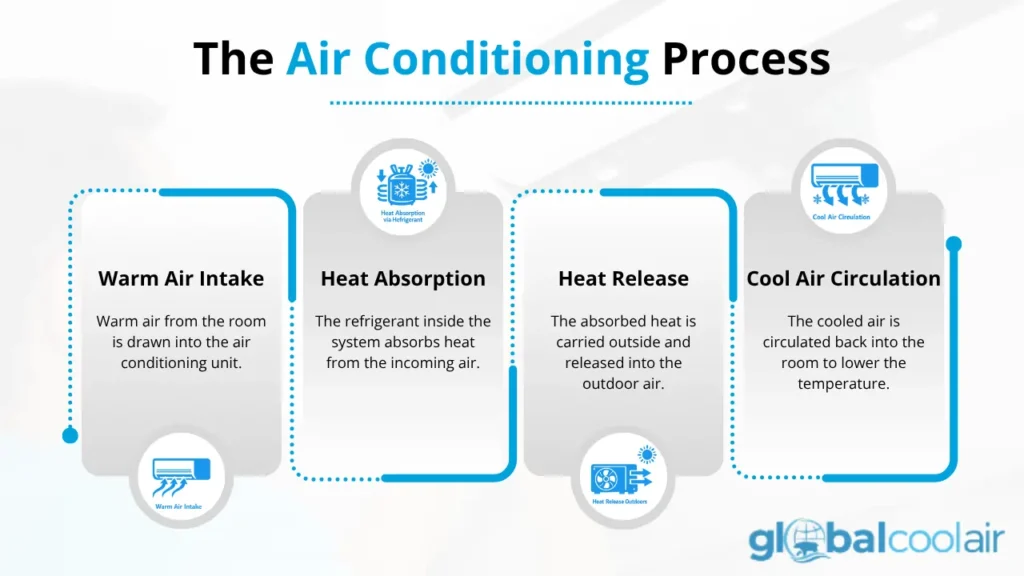
The Air Conditioning Process (Step-by-Step)
When you break it down into a simple cycle, it is much easier to understand how air conditioning works.
The mechanism works through the same repeating steps that aim to eliminate heat and make your space comfortable.
Step 1: Warm Air Intake
It begins by bringing warm air from your home into the system using return vents. This will guarantee uninterrupted airflow for cooling and recirculation.
Step 2: Heat Absorption via Refrigerant
After entering, the hot air flows over the evaporator coil. Here, the refrigerant absorbs heat from the air, cools it, and is then pumped back into the room.
Air conditioners use refrigerants to move heat rather than produce cold air, so this step is key to how they work.
Step 3: Heat Release Outdoors
Once the heat has been absorbed, the refrigerant flows to the outdoor unit. The compressor raises the pressure, and the condenser coil throws out the heat.
This step is essential to understanding how air conditioning works because it is the process that removes unwanted heat from indoors and expels it to the outside air. Heat transfer is the fundamental principle of modern cooling systems.
Step 4: Cool Air Circulation Back Into the Room
With the heat removed, the cooled air is then pumped back into your house by fans and, in some systems, by ducts. This perpetual cycle maintains a consistent indoor temperature.
Why Proper Air Conditioner Installation Matters
Although the mechanism explains how aircon works, its actual performance depends on proper installation. When air conditioner installation is done properly, it guarantees:
- Efficient airflow
- Correct refrigerant levels
- Lower energy consumption
- Longer system lifespan
According to the YourHome program, the installation and sizing of a system are important to the efficiency and comfort of Australian houses.
How Each Type of Air Conditioning System Works
When studying how air conditioning works, it is important to note that not all systems operate the same way.
There are various air conditioning systems suited to different areas, climates, and cooling requirements.
Split Systems
Split system air conditioners consist of two major units: the indoor and outdoor units. The indoor unit absorbs heat from the room, and the outdoor unit releases it to the outside through the refrigeration cycle.
This setup is a clear illustration of how an air conditioner works, with the refrigerant serving as a circulating medium between the two units to exchange heat effectively. Split systems are among the most efficient systems used in small rooms.
Ducted Systems
In ducted air conditioning, the cooled air is delivered from a central unit (typically located in the roof space) to various rooms via a network of ducts.
This system emphasises how air conditioning works on a larger scale, where an entire home is cooled rather than a single unit in a particular room.
Ducted systems are ideally suited to larger houses, particularly when zoning is done appropriately to minimise energy consumption.
Evaporative Cooling
Evaporative air conditioning does not operate like conventional refrigerated systems. It does not use refrigerant; instead, it cools the air by channelling it through pads moistened with water. The water cools the air as it evaporates, and the air circulates throughout the house.
These systems are best for:
- Hot, dry climates
- Areas with low humidity
- Homes with good ventilation
Evaporative systems do the best work in dry areas where evaporation is effective.
Choosing the Right Air Conditioner
Choosing the appropriate unit is equally important as understanding how air conditioning works.
You should avoid picking the wrong system, as this may lead to poor performance, higher energy bills, and reduced comfort.
These are the things you should consider before choosing the most suitable one.
Room Size
The size of your space is a significant factor in choosing the appropriate unit. A system that is too small will not cool adequately, and an oversized system will start and stop too often.
To find out more, check our guide on the right air conditioner size you’ll need.
Climate
The performance of some systems depends on the local climate. For example, wet areas might require more powerful or specialised systems than dry areas.
The Bureau of Meteorology maintains climate records that can inform cooling decisions based on regional conditions.
Energy Efficiency
Energy ratings play a vital role in assessing AC systems. More efficient units consume less electricity while providing the same amount of cooling.
Energy Rating states that higher-rated appliances can save significant energy and reduce operating costs.
Overview of Popular Options
When comparing AC brands, it’s important to look beyond just the name. Consider:
- Energy efficiency ratings
- Cooling capacity
- Noise levels
- Warranty and support
Understanding these factors helps clarify what an air conditioner really offers in terms of performance and reliability.
Maintenance and Servicing
The only way to keep your system running efficiently is to maintain it regularly.
Although you may know how an air conditioner works, you will find that if it is not serviced, its performance will decrease, energy costs will increase, and you will experience breakdowns.
Regular maintenance ensures your system continues to run. Over time, dust, debris, and wear may affect your unit’s performance.
The Australian Refrigeration Council notes that well-maintained systems are more efficient and are not prone to faults.
What’s Included in Professional Air Conditioning Services
Professional air conditioning services go beyond simple cleaning. A qualified technician will typically:
- Clean or replace filters
- Inspect and clean coils
- Check refrigerant levels
- Test airflow and system controls
- Inspect electrical components
All these steps ensure that all components of the system are operating properly, facilitating the entire cooling process and maintaining efficiency.
It is best to have licensed professionals service them to maintain safety and compliance.
Signs Your Unit Needs Attention
Even with a basic understanding of how air conditioning works, it’s important to recognise when something isn’t right. Typical red flags are:
- Weak or uneven airflow
- Unusual noises or smells
- Higher-than-normal energy bills
- Inconsistent cooling
- Water leaks or excess moisture
These problems tend to signal inefficiency or malfunctions in the system that will need to be addressed immediately.
Common Problems and Repairs
Even with a solid understanding of how air conditioning works, issues can still arise over time. Whether you’re familiar with how an air conditioner works or just learning air conditioning basics, recognising common problems early can help prevent bigger and more expensive failures.
Despite good knowledge of air conditioning, problems may develop over time. Whether you are a know-it-all on how an air conditioner works or are simply a beginner on air conditioning matters, identifying problems at the initial stages can save you the hassle of the occurrence of more serious and costly failures.
Weak Airflow
One of the most common problems with AC systems is reduced airflow. It may be due to blocked filters, ducts, or broken fans.
Limited airflow directly affects how air conditioners work, making it difficult for the system to circulate cool air. This usually results in unequal cooling and increased energy consumption.
Strange Noises
Something is wrong when you hear unusual noises, such as banging, rattling, or squeaking. These sounds may indicate loose parts, motor problems, or debris in the unit.
If you understand how an aircon works, you will know that the system runs continuously. Any unfamiliar sound usually signifies an interruption of some part of that cycle.
Refrigerant Leaks
Refrigerant plays a key role in how air conditioning works, so a leak can greatly diminish performance.
Since refrigerant is critical to how an AC works, it must be repaired immediately to prevent further losses.
When to Call for Repair vs Replacement
Knowing when to call for AC repair or replace the unit is essential for managing long-term expenses.
Consider repair if:
- The issue is minor (e.g. clogged filter, small component failure)
- The unit is relatively new
- Repair costs are low
Consider replacement if:
- The system frequently breaks down
- Energy bills continue to rise
- The unit is old or inefficient
Understanding how air conditioners work helps you make wiser choices, ensuring you don’t spend a lot of money fixing something that can be replaced for less.
Get The Right Advice Early On With Global Cool Air!
After working with these systems day in and day out, I can say that understanding how air conditioning works really does make a difference.
At its core, the process is straightforward, but as simple as that sounds, every part of the system needs to work properly to keep things running efficiently.
That’s why it helps to have a basic grasp of how an air conditioner works and how each component contributes to overall performance.
However, the people who get the most out of their systems are the ones who take the time to understand their options and make informed decisions.
Whether it’s choosing the right system, knowing when to service it, or recognising early signs of issues, it all adds up to better comfort and long-term savings.
At Global Cool Air, we deal with everything from installations to servicing and repairs, so we see how these systems perform in real homes every day.
If you’re unsure about your current setup or planning to upgrade, it’s worth getting the right advice early on.
If you want your system to run efficiently and reliably, the best step is to have us assess it properly.Contact us now to get started!


Get Your Aircon Quote Today
Request a free air conditioning quote and let our Perth team guide you.