

Fans vs Air Conditioners: Pros & Cons Explained
Every summer, I meet homeowners asking the same question: “Should I rely on a fan or air conditioner to stay cool?” It’s a universal struggle—the hotter the days get, the more we debate whether fan vs AC is the smarter, more affordable, or more comfortable choice.
From my years working as a technician for air conditioning in Perth, I’ve seen both sides. Some families swear by their ceiling fans because they’re cheap to run and eco-friendly, while others can’t imagine surviving a humid heatwave without their AC.
The fact is that they both have their own place; the only question is which one you want to choose, depending on comfort, health, energy bills, and environmental impact.
Or you can just use the aircon fan mode setting of your system. Just find the aircon symbol with a fan and it will work just like a fan does.
In this blog, I’ll walk you through the pros and cons of fans vs air conditioners, compare their electricity usage, and share some practical tips I’ve learned on the job.
By the end, you’ll have a clear idea of when to choose a fan or aircon, and when it makes sense to use both together for the best balance of comfort and cost.
How Fans vs. Air Conditioners Work
When deciding between a fan or an air conditioner, it helps to understand how each actually works.
A fan does not cool the air; it is simply circulated by it. This movement gives your skin the wind-chill effect, thus causing your temperature to drop, but the temperature of the room remains the same. That’s why in mild weather, many people find a fan vs aircon setup more cost-effective, especially if electricity usage is a concern.
An air conditioner, on the other hand, actively lowers the air temperature by pulling warm air from the room, cooling it through a refrigeration cycle, and then releasing it back inside. It also reduces humidity, which is why an AC feels far more refreshing during sticky summer days. However, this power comes at a price; comparing the power consumption of air conditioners and fans reveals a significant disparity, with AC units consuming significantly more energy than fans.
For homes with ceiling fans and air conditioning, many people combine the two—running a ceiling fan while setting the AC a few degrees higher can cut energy bills while still keeping the room comfortable.
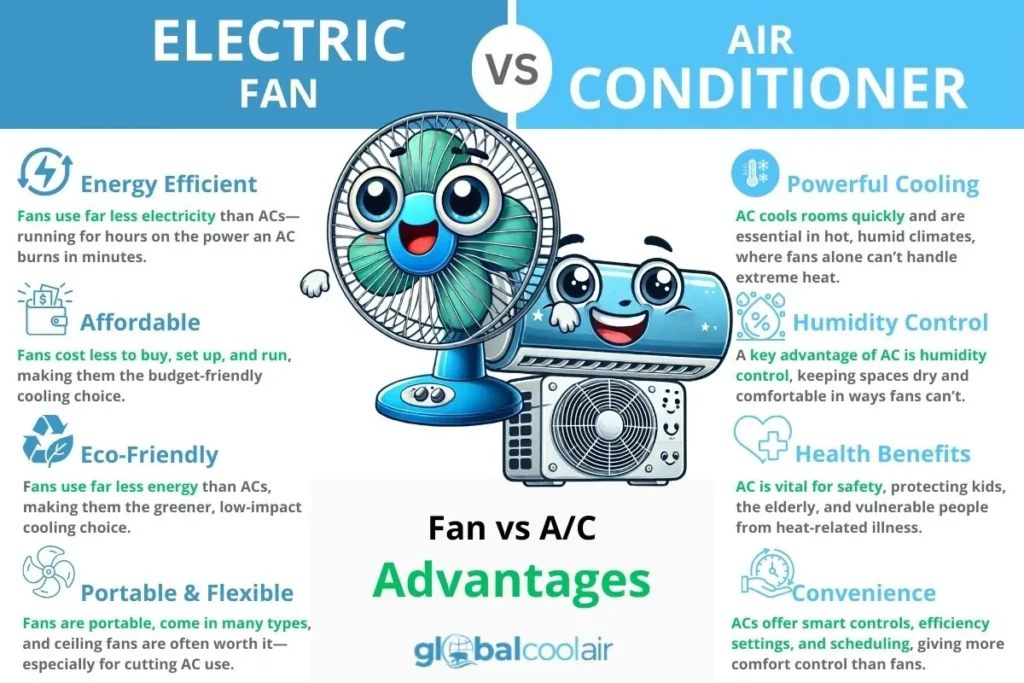
Pros of Using Fans
If you’re weighing up a fan vs air conditioner, one of the biggest advantages of fans is their overall efficiency and affordability. Here’s why many people still reach for a fan first:
Energy Efficiency
Fans use a fraction of the electricity that AC units require. In fact, when comparing AC vs fan power consumption, the difference is huge—fans can often run for hours on the same amount of energy it takes an air conditioner to run for minutes. For anyone concerned about air conditioner vs fan electricity usage, fans are the clear winner.
Energy efficient air conditioners exist but that’s only when compared to other air conditioners.
Affordability
A fan is far cheaper to buy, install, and maintain than an AC system. Fans are a budget-friendly way to stay cool without skyrocketing bills.
Eco-Friendly Choice
Because they consume so little energy, fans have a much smaller carbon footprint. If you’re choosing between a fan or aircon, fans are the greener option and can significantly reduce your household’s environmental impact.
Portability & Flexibility
Fans are lightweight, portable and available in a wide variety: tower fans, desk fans, pedestal fans and ceiling fans. This ensures that they will be suitable for various rooms and requirements. It also makes people wonder, are ceiling fans worth it? The answer is usually yes, especially when they’re used to support or reduce reliance on AC.
Pros of Using Air Conditioners
When it comes to fan vs air conditioner, the biggest advantage of every type of AC is its ability to deliver consistent and powerful cooling. They’re better at improving indoor air quality at home. Air conditioners actively heat and cool the room, whereas fans do not change the temperature and humidity of the room; they simply circulate the air. Here are the key benefits:
Powerful Cooling
Air conditioners, especially the split system ACs, can rapidly reduce the temperature in a room, making them essential in hot and humid climates. This is where the fan vs AC debate usually tips toward AC—fans may keep you comfortable in mild heat, but only air conditioning can handle extreme summer conditions.
Ducted air conditioning is also able to cool your entire home. Just make sure the AC size is good enough to make sure it has the capacity to cool your house.
Humidity Control
One of the biggest advantages of an air conditioner is its ability to regulate humidity. By pulling moisture from the air, AC units make a space feel less sticky and far more comfortable—something fans alone cannot achieve.
Health Benefits
During heatwaves, the choice between a fan and AC can become a matter of health. Air conditioners prevent heat exhaustion and heat stroke by keeping indoor areas cool and stable. AC is safer in households that have children, the elderly or those with health issues.
Just make sure to have it cleaned routinely, for an aircon can also make you sick because of the dust trapped in its uncleaned filter.
Convenience & Smart Features
The new air conditioning units feature programmable thermostats, energy-efficient settings, and smart home integration like for Air Touch 5. Compared to a simple fan, an AC gives you greater control over comfort, efficiency, and scheduling.
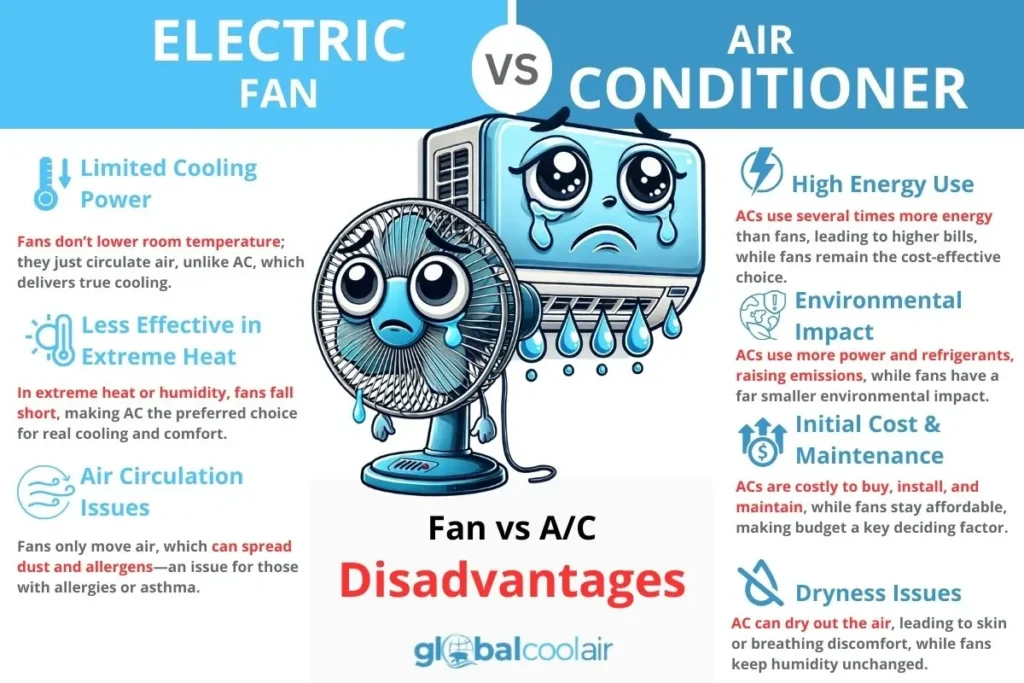
Cons of Using Fans
While fans have plenty of benefits, they do come with limitations—especially when compared to an air conditioner vs fan setup. Here are the main drawbacks:
Limited Cooling Power
A fan doesn’t actually lower the room temperature—it just moves air around. This means that in a straight fan vs aircon comparison, a fan can’t compete with the cooling performance of an AC.
Less Effective in Extreme Heat
When temperatures soar, fans often feel inadequate. In very hot or humid climates, the choice of a fan or AC usually leans toward air conditioning, since AC units can actively reduce both heat and humidity.
Air Circulation Issues
Fans only circulate air, which means they may spread dust, pollen, or allergens around the room. For people with allergies or respiratory issues, this can be a downside.
Cons of Using Air Conditioners
Although AC units offer powerful cooling, they also come with some drawbacks. When comparing fans to air conditioners, these disadvantages often make fans the more practical choice in certain situations.
High Energy Use
One of the biggest downsides is the air conditioner vs fan electricity usage. Running an AC consumes far more energy than a fan, which means higher bills. In fact, AC vs fan power consumption can differ by several times, making fans a much more cost-effective option for everyday cooling.
Check here how much electricity an air conditioner uses.
Environmental Impact
Another consideration in the fan vs AC debate is the environmental footprint. Air conditioners rely on AC refrigerants and consume more electricity, which contributes to greenhouse gas emissions. By contrast, fans have a much smaller impact.
Initial Cost & Maintenance
Air conditioners are expensive to purchase, install, and maintain. Unlike a simple ceiling or pedestal fan, an AC system may require professional servicing and aircon repairs—costs that add up over time. For households asking whether to choose a fan or aircon, budget is often the deciding factor.
Dryness Issues
While AC reduces humidity, it can also leave the air too dry. Over time, this may cause dry skin, irritated eyes, or respiratory discomfort. This is one area where fans, which don’t alter humidity, can feel gentler on the body.
When to Choose a Fan vs. an Air Conditioner
The fan vs air conditioner debate doesn’t have a one-size-fits-all answer—it really depends on your climate, budget, and lifestyle. Here’s how to decide:
Best for Fans
If you live in a region with mild summers, a fan is often enough to keep you comfortable. They’re ideal for budget-conscious households and for anyone aiming for a more eco-friendly lifestyle.
When comparing air conditioner vs fan power consumption, fans are the clear winner for cutting electricity costs.
Many people also ask, Are ceiling fans worth it? In these situations, yes—especially if you want affordable and efficient cooling without the high energy use of AC.
Best for Air Conditioners
In hot, humid climates or during extended heatwaves, AC units are usually the better choice. The air conditioner pros become especially important for households with infants, elderly members, or anyone sensitive to high heat.
Unlike fans, air conditioners can actually regulate both temperature and humidity, which makes a big difference in comfort and safety.
A Balanced Approach
For many people, the answer isn’t fan or AC, but both. Combining ceiling fans and air conditioning can maximise comfort while cutting energy costs. For example, you can set your AC a few degrees higher while running a fan to circulate the cool air. This hybrid setup reduces the electricity usage gap between air conditioners and fans, keeping bills manageable without sacrificing comfort.
Fans vs Air Conditioners: Practical Tips for Staying Cool
No matter whether you use a fan or an air conditioner, you can use it smartly to remain comfortable without wasting energy. The following are some of the basic yet useful tips:
Pair Fans with Open Windows at Night
When the outdoor air is cooler, running a fan near an open window helps pull in the fresh breeze and circulate it through your home. This trick can reduce the need for AC and cut down on air conditioner vs fan electricity usage.
Set AC at an Optimal Temperature
For households debating the energy consumption of fans versus AC, one way to save energy is by adjusting the thermostat. Keeping your AC in optimal temperature, maybe between 24–26°C (75–78°F) is often the sweet spot—cool enough to stay comfortable but efficient enough to avoid soaring bills.
Combine Ceiling Fans and Air Conditioning
Running ceiling fans and air conditioning together is one of the most effective ways to cool a room. A ceiling fan helps distribute cool air more evenly, allowing you to raise the thermostat a few degrees without losing comfort. This hybrid approach strikes the right balance in the fan vs aircon debate.
Regular Cleaning and Maintenance
Dust buildup on fans can affect air circulation, and a poorly maintained AC unit can work harder than it should, increasing AC vs fan power consumption differences even more. Clean your fans regularly and have your air conditioner serviced at least once a year to keep both systems working efficiently.
Here’s how often to clean your aircon filter.
Fan or Air Conditioner: Common Questions Often Asked
Fan vs Air Conditioner: Which is Cheaper to Run?
A fan is much cheaper to run than an AC. On average, a ceiling fan uses around 50–70 watts per hour, while an air conditioner can use 1,500–3,500 watts per hour. In the fan vs air conditioner cost debate, fans win hands down when it comes to electricity bills.
Are Ceiling Fans Worth It in Summer and Winter?
Yes. Ceiling fans are worth it in both seasons. In summer, they help circulate cool air (especially when paired with AC), while in winter, reversing the fan direction pushes warm air down from the ceiling. This makes ceiling fans and air conditioning a great combo for year-round comfort.
Air Conditioner vs Fan Electricity Usage: How Much Can I Save?
The savings are significant. A fan might cost only a few cents per hour to run, while an AC can cost over a dollar per hour, depending on your energy rates. By using fans strategically, you can cut your cooling expenses by 30–40% compared to relying solely on AC.
Fan vs Aircon: Which is Better for Allergies?
An air conditioner may be better for allergy sufferers because it filters and cools the air, reducing pollen, dust, and pollutants. Fans, however, only circulate existing air and may spread allergens around the room. For sensitive households, fan or aircon choice often leans toward AC.
Is It Safe to Sleep with a Fan All Night?
Yes, it’s generally safe to sleep with a fan on all night. However, some people experience dryness in their eyes, nose, or throat due to constant airflow. If that’s an issue, try adjusting the fan speed or position—or consider using a fan together with the AC set at a moderate temperature for balance.
Air Conditioner vs Fan: How to Decide What Works for Your Home
When it comes to the fan vs air conditioner debate, there isn’t a single right answer. Fans are budget-friendly, energy-efficient, and eco-conscious, while AC units deliver powerful cooling and comfort during extreme heat.
The decision mainly hinges on your climate, lifestyle and budget. To most households, the smartest choice is a combo, where you can use ceiling fans and air conditioning simultaneously to keep yourself cool without driving up costs.
Of course, if you decide an AC is the best fit for your home, proper installation and maintenance make all the difference. That’s where we come in.
At Global Cool Air, we help homeowners with everything related to air conditioning—whether it’s selecting the right unit, handling professional aircon installation, or keeping your system running efficiently year after year.
Ready to take control of your comfort this summer? Contact us today for expert advice, installation, or maintenance, and let’s make sure you stay cool without the stress.


Get Your Aircon Quote Today
Request a free air conditioning quote and let our Perth team guide you.